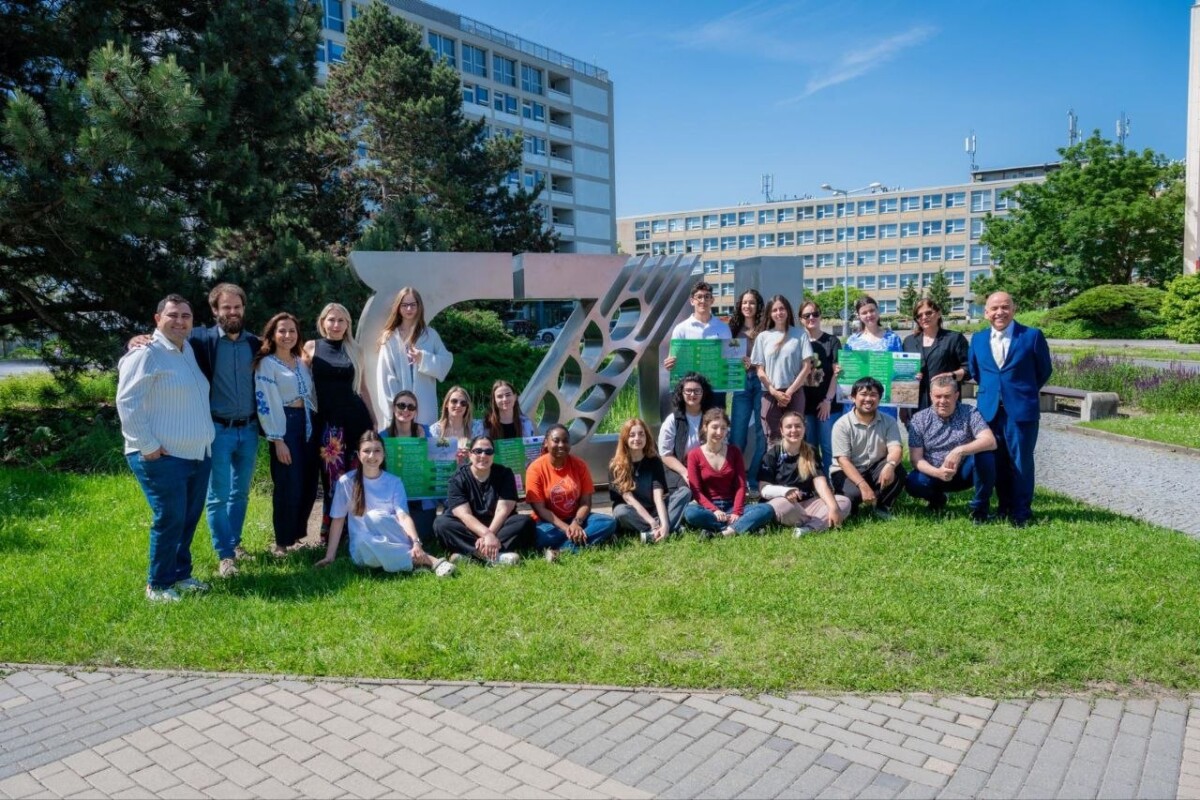
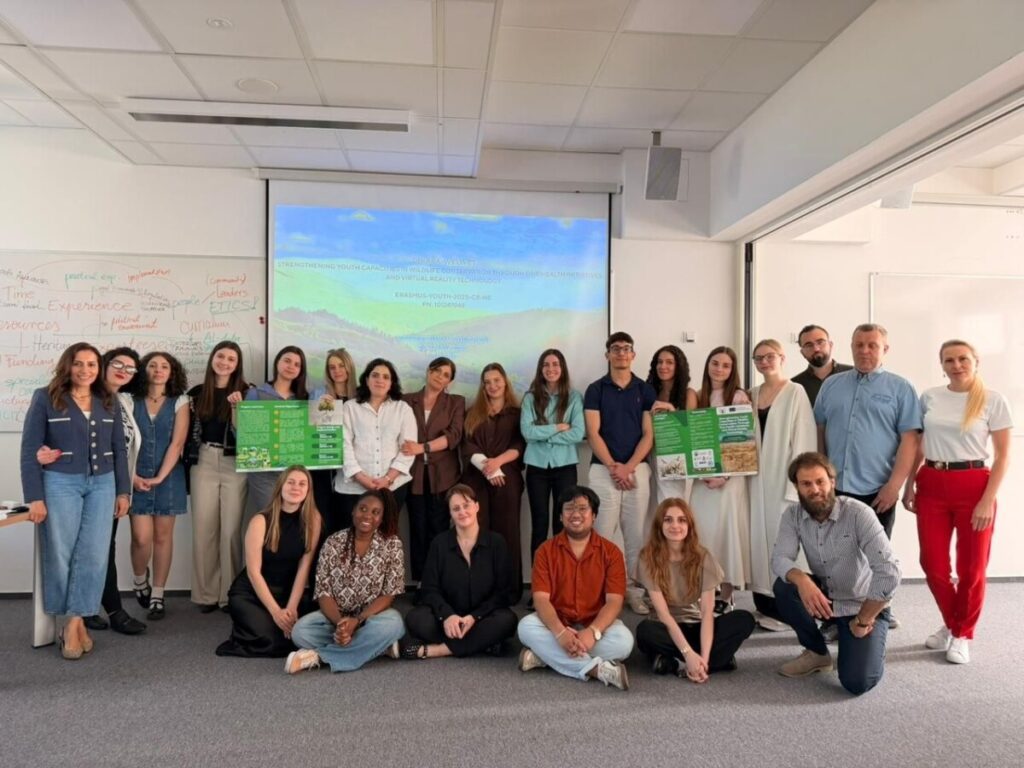
Viktoria Chyr, a first-year student at the Department of Biochemistry and Biotechnology, participated in an international workshop in Prague, held as part of the Erasmus+ DINARA-WELWET project — Strengthening Youth Capacities in Wildlife Conservation Through One Health Initiatives and Virtual Reality Technology. The trip was made possible through participation in the activities of the non-governmental organization (NGO) “BRIT.”
The workshop brought together young people, students, researchers, and representatives of civil society organizations interested in wildlife conservation, environmental education, and the implementation of modern technologies in nature conservation. The focus was on the One Health concept, which highlights that human, animal, and environmental health are closely interconnected.
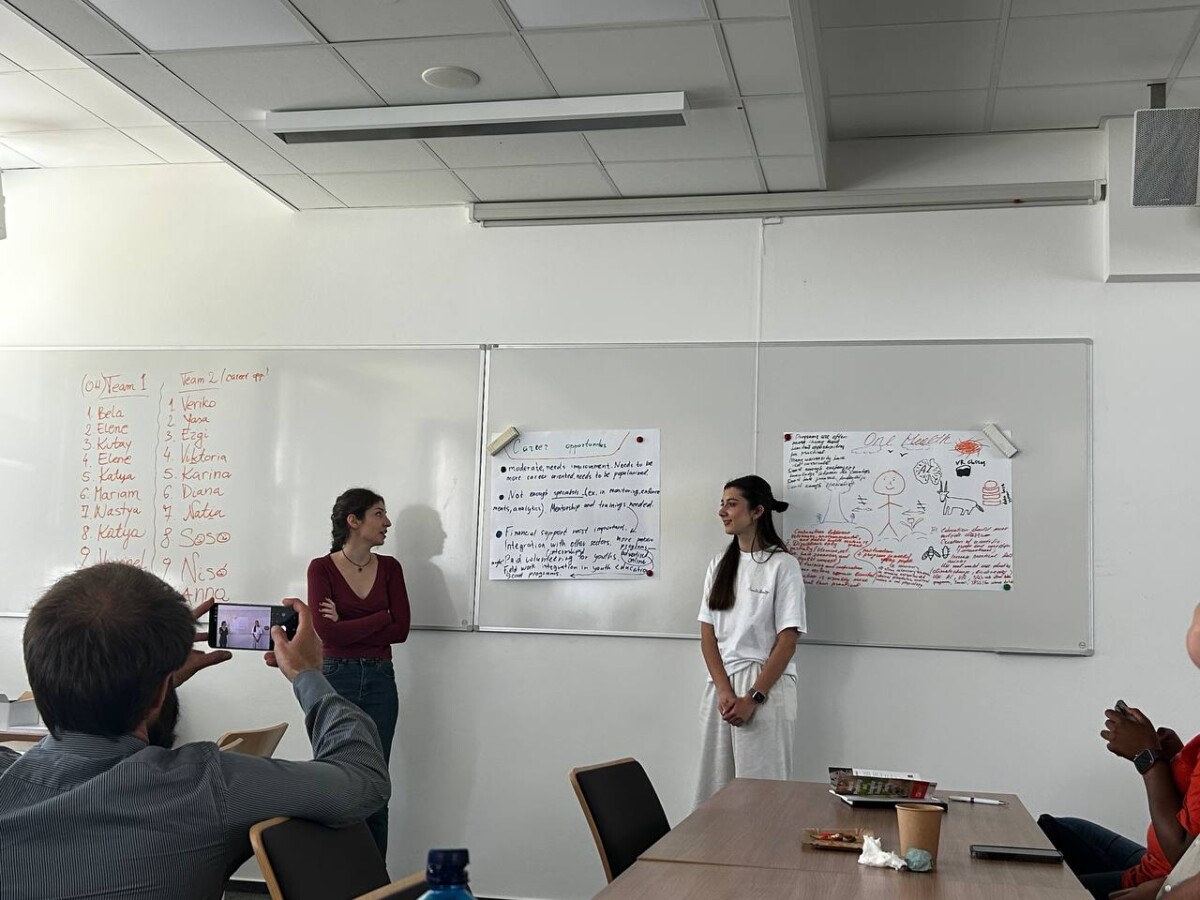
Throughout the event, participants worked in teams, discussed real-world environmental challenges, sought practical solutions, and shared their experiences with representatives from various countries. Special attention was given to how modern digital tools can help preserve biodiversity: from VR technologies and artificial intelligence to interactive mapping, data collection, and monitoring the state of natural ecosystems.
What was particularly valuable was that the workshop combined science, practice, and international communication. Participants had the opportunity to see how conservation ideas can be turned into real projects, how young people can get involved in environmental initiatives, and how biological knowledge is applied beyond the classroom.
For Viktoria Chyr, participating in the workshop was an important experience for her professional and personal development. The event provided an opportunity to deepen her knowledge of wildlife conservation, biodiversity, and the One Health concept, as well as to familiarize herself with European approaches to the use of innovative technologies in biology and ecology.
Such international trips open up new opportunities for students: they help them better understand the contemporary challenges facing science, develop teamwork and intercultural communication skills, and motivate them to continue participating in scientific and civic initiatives.