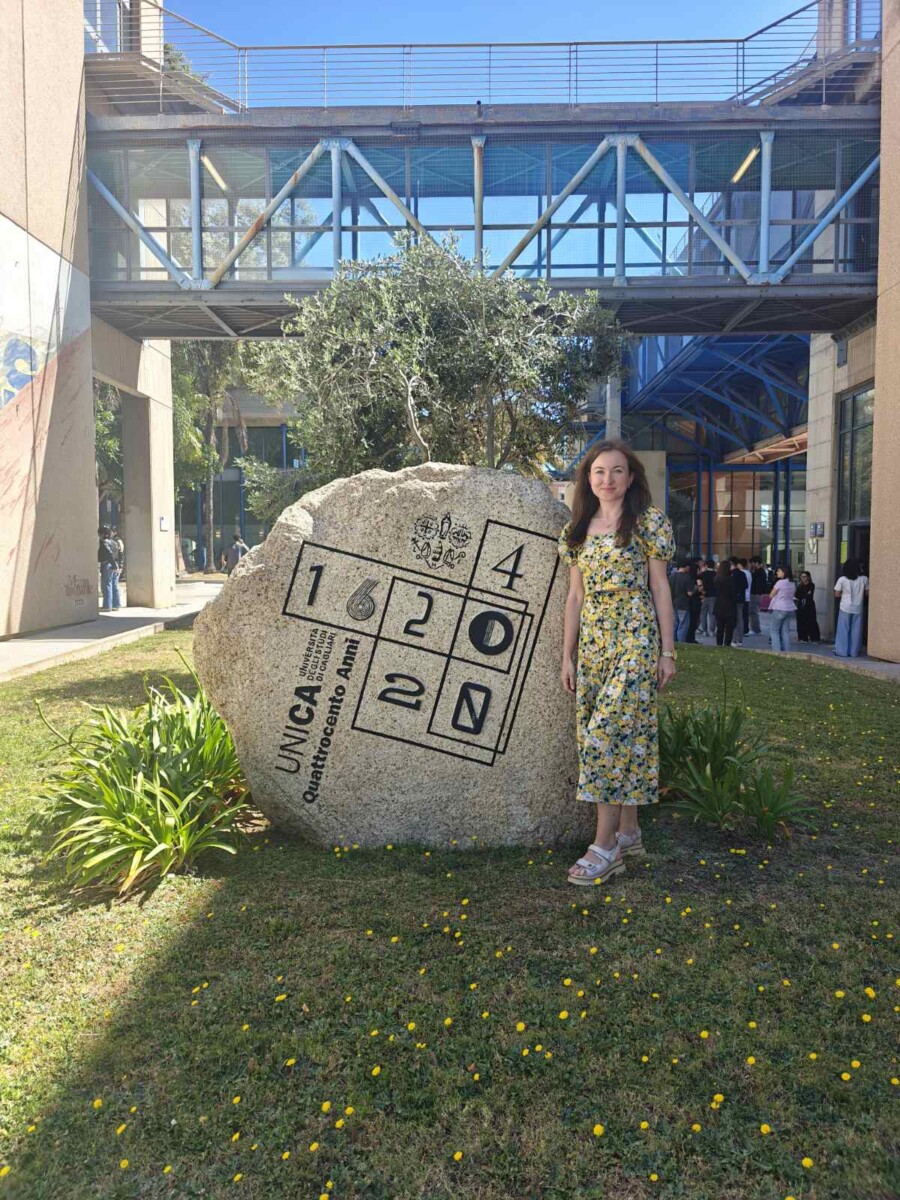
Researcher of the Department of Biochemistry and Biotechnology, Olha Strilbytska, spent six weeks at the research laboratory of University of Cagliari, that is one of the oldest universities in Italy. Located in the heart of Sardinia, the University of Cagliari is among the leading research centres in Southern Italy and an active member of the EDUC European University Alliance. The fellowship was supported by the EDUC R&I Fellowship programme funded by the European Union within the framework of Horizon Europe.
EDUC R&I Fellowship is a programme of short- and medium-term research mobilities for researchers at all career stages. It brings together nine partner universities from seven European countries, including the University of Cagliari (Italy), the University of Potsdam (Germany), Masaryk University (Czech Republic), the University of Pécs (Hungary), and Vasyl Stefanyk Carpathian National University (Ukraine). The programme aims to foster new competencies, strengthen international scientific partnerships, and generate innovative research ideas.
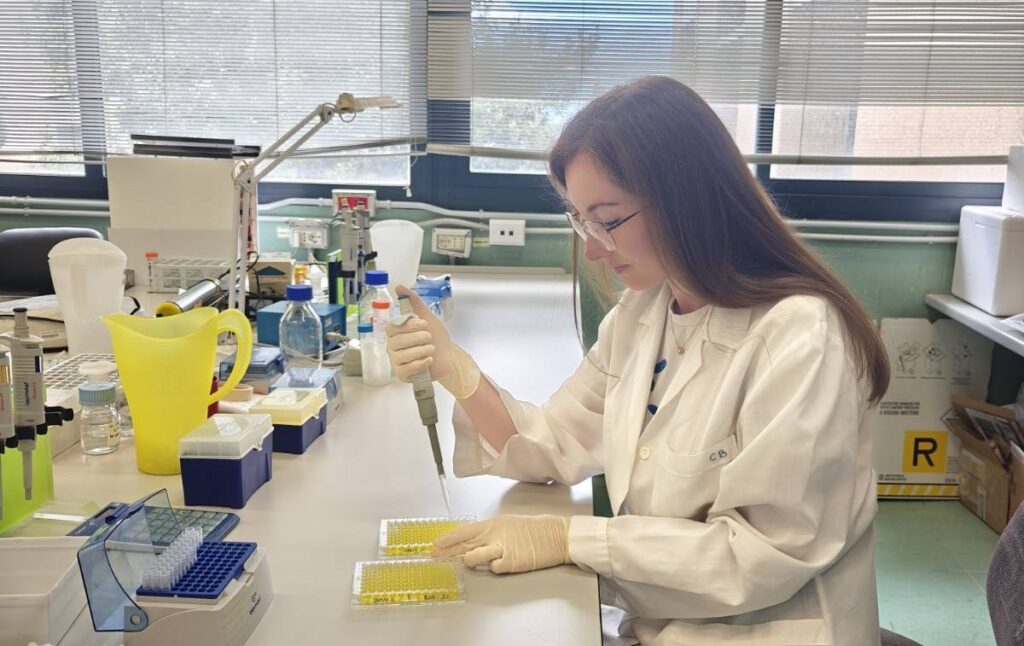
The hosting side was the research group of Professor Cristina Cocco, which specializes in the biochemistry of neuropeptides and molecular markers of neurodegenerative and autoimmune diseases. The laboratory applies methods such as ELISA, immunofluorescence, western blotting, and gel chromatography using both animal models and human samples.
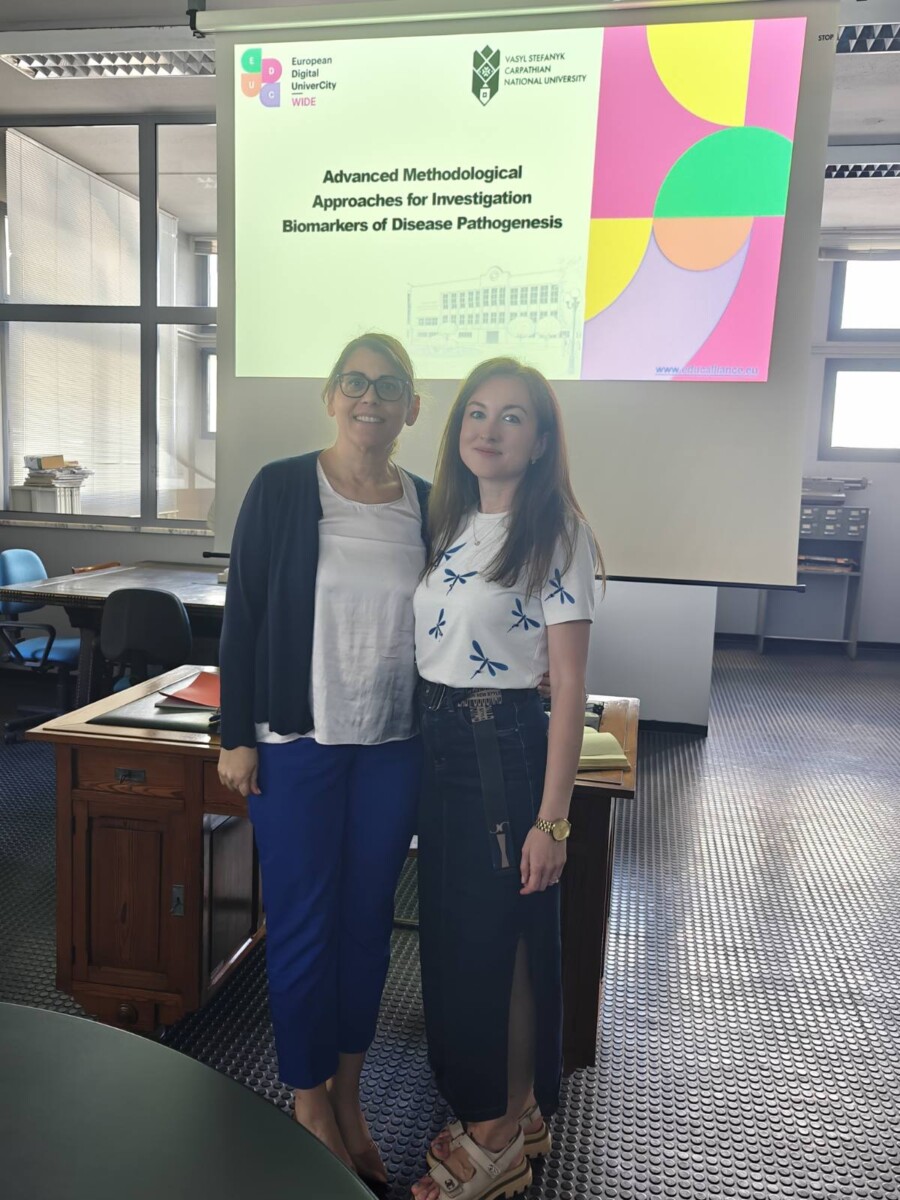
The fellowship project was entitled “Advanced Methodological Approaches for Investigating Biomarkers of Disease Pathogenesis.” Advanced methodological approaches to studying biomarkers in the context of disease pathogenesis represent a key intersection of the scientific interests of both research teams. Particular attention during the fellowship was devoted to the potential application of modern methodological approaches for investigating post-traumatic stress disorder (PTSD) and related neurobiological changes.
This fellowship is an example of how participation in the EDUC Alliance provides researchers from our university with real access to leading European laboratories and promotes the development of long-term international scientific partnerships.
As a result of the fellowship, the parties outlined directions for future collaboration. They discussed the preparation of joint scientific publications, opportunities for collaborative grant applications, and ideas for future research projects. The acquired experience and methodological approaches are planned to be integrated into ongoing research projects.